Above the Clouds at Bà Nà Hills
A mountain built from layers
Some places are hard to explain because they refuse to be just one thing. Bà Nà Hills is one of them.
Today, it feels part mountaintop fantasy, part theme park, part architectural fever dream. But beneath all of that is a more layered story. What now draws crowds for cable cars, castles, and the famous Golden Bridge began as a French colonial mountain resort founded in 1919, built high above the heat of Da Nang as an escape into cooler air. Later, war and abandonment reduced much of it to ruin. What stands there now is the result of a dramatic reinvention, with old echoes still tucked into the mountaintop experience.
That mix is part of what makes Bà Nà Hills so fascinating. It is beautiful, strange, impressive, and at times a little surreal. It can feel sacred in one moment and delightfully ridiculous in the next.
Honestly, I loved that about it.
An early start and the deal of the century
We got up early that morning, packed up all of our bags and got ourselves ready for a full day of adventure. Several of us walked to a nearby coffee shop to start the day. The air was perfect, the walk felt refreshing, and although I was running on a mediocre night of sleep and a respectable amount of jet lag, I was excited.
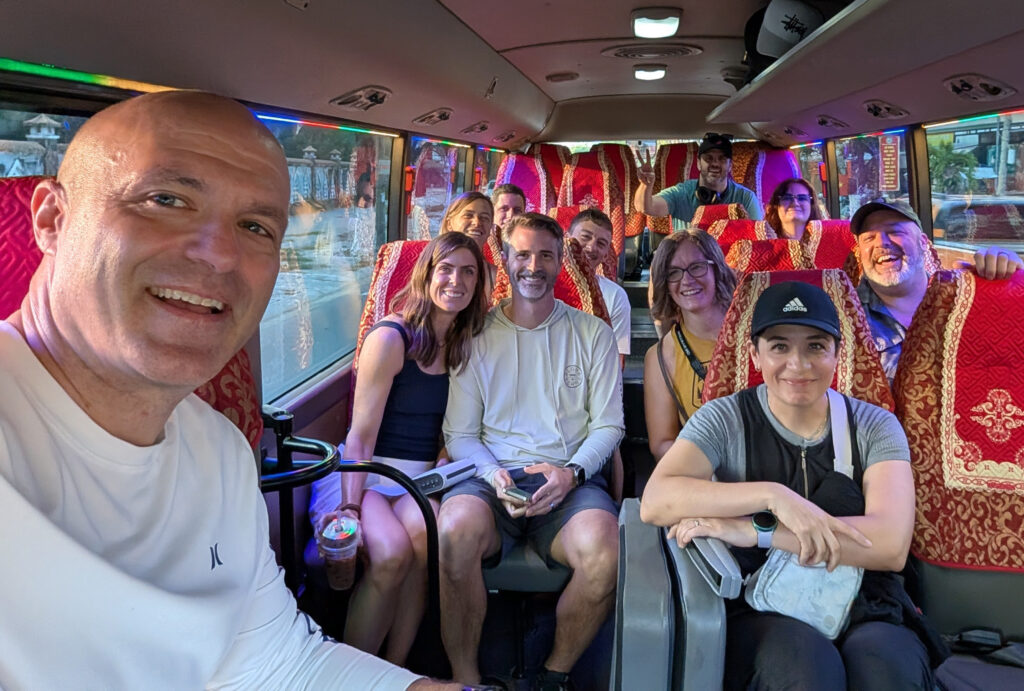
Thao had helped arrange a bus for us with a private driver for the entire day. He took us from Da Nang to Bà Nà Hills, waited while we explored, and then drove all of us on to Hoi An. I am still not over the fact that this full-day private bus situation cost us only $80 USD total. For all of us. Less than nine dollars a person for what felt like royal treatment. Vietnam continues to expose just how absurdly expensive everything is back home.
Climbing into the clouds
The drive to Bà Nà Hills was beautiful, but the real magic began as we approached the mountain itself. The lush hills just kept rising, all jungle and folds and dramatic green depth. Even though the site sits inland from Da Nang, once you reach its nearly 5,000-foot elevation, the views stretch far enough to include the sea.
We arrived before the park opened and prepared ourselves for what was, by Vietnam standards, a very expensive day. By American standards, though, it was laughably affordable. Our tickets were about $42 per person, which included access to one of the most visually spectacular places I have ever seen. In the U.S., that kind of price barely gets you parking and a bottled water.
Then came the cable car. Wow! Whatever jet lag I was still carrying lifted the moment we began to rise.
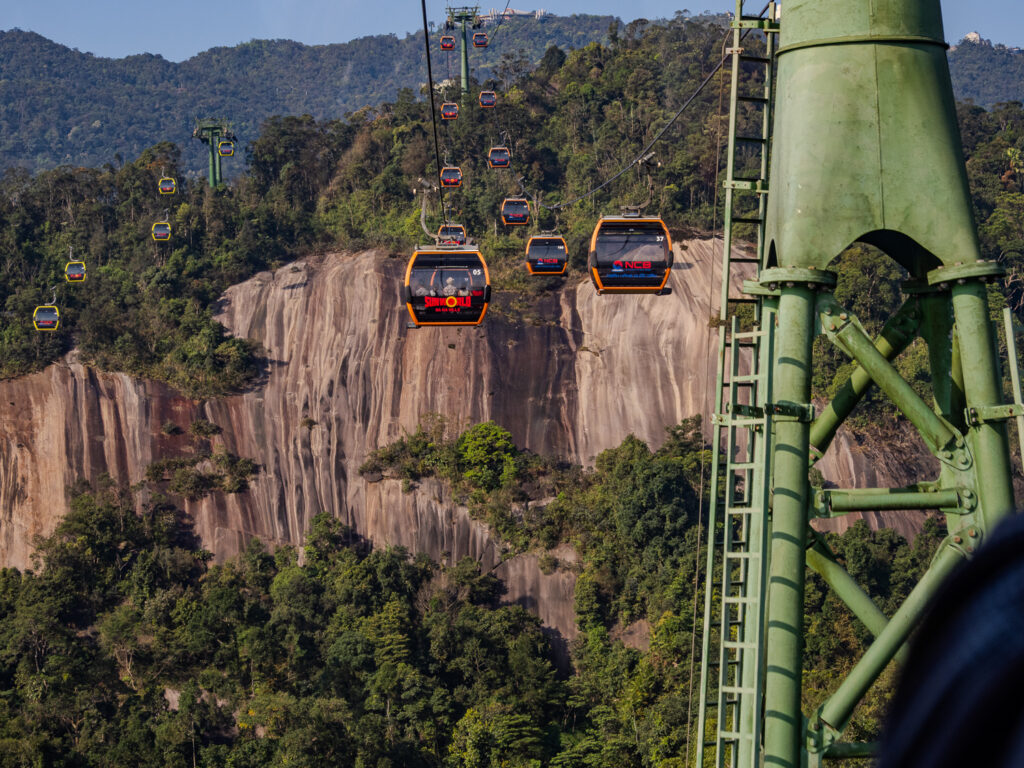
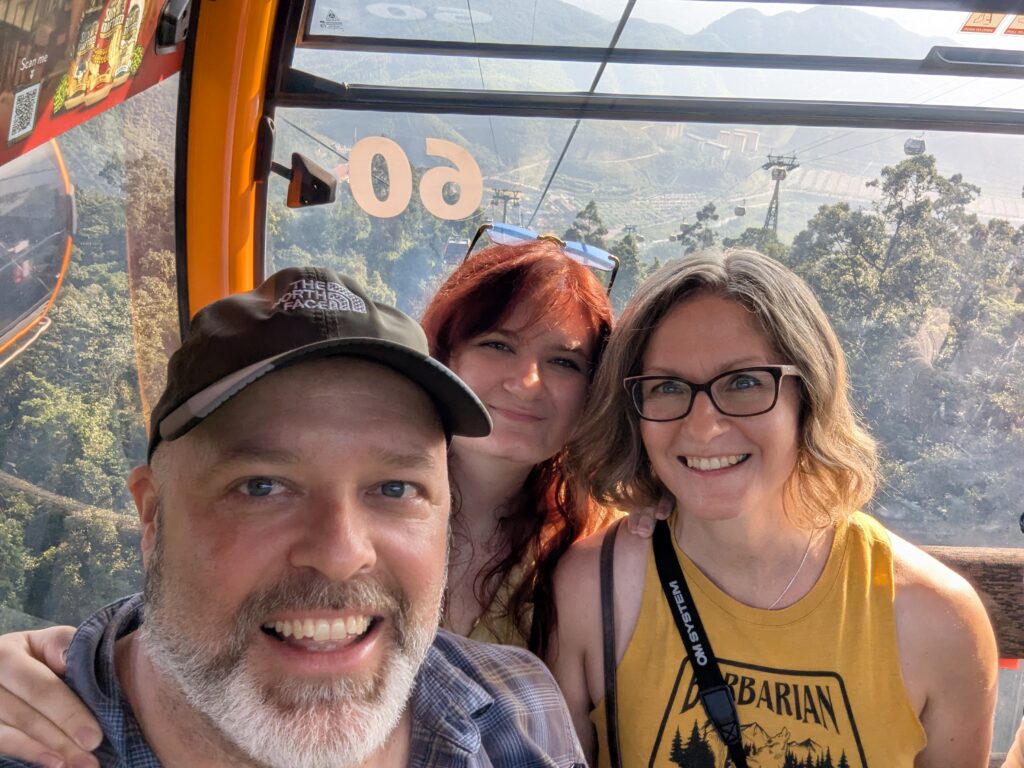
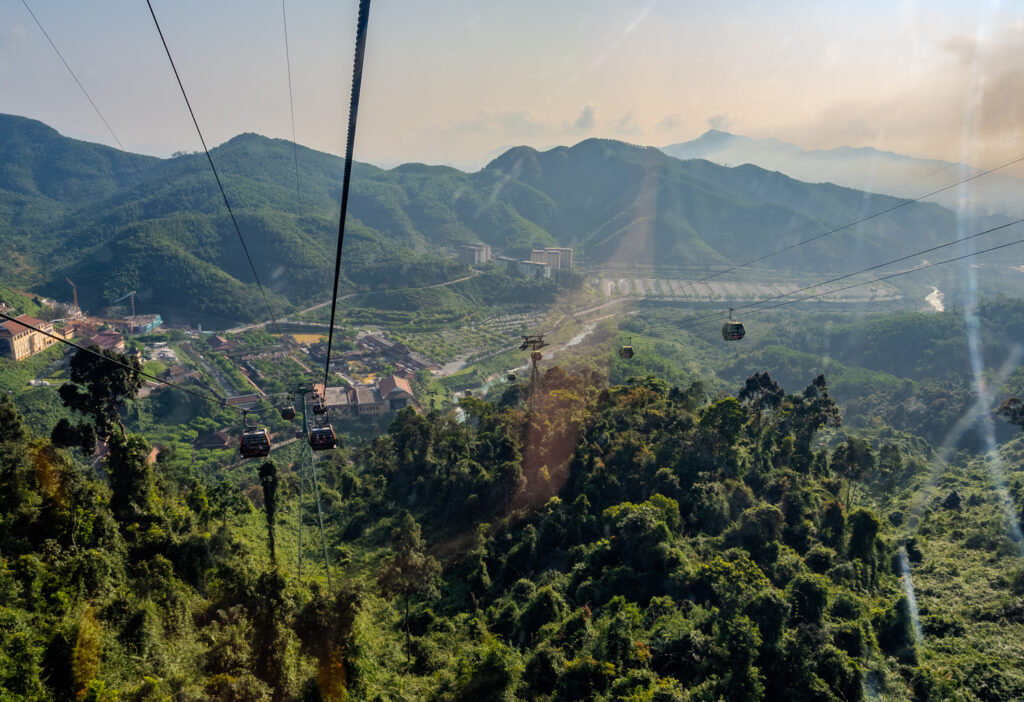
The Bà Nà cable car is not just scenic, it is genuinely record-setting. When it opened in 2013, it held the Guinness World Record for the longest non-stop single-track cable car at 5,801 meters, along with the highest difference between departure and arrival stations. It takes about 15 to 20 minutes, and every second of it feels cinematic.
Below us were thick jungle canopies, steep ravines, rivers, and waterfalls. Around us were rolling mountains, mist and the kind of views that make a whole group fall into that happy rhythm of chatter, laughter, photo-taking, and occasional stunned silence. It was one of those rare travel moments where everyone is fully present because the experience is too good not to be.
I don’t think any of us loved that cable car ride in a normal, casual way. We were enchanted.
The bridge in the sky
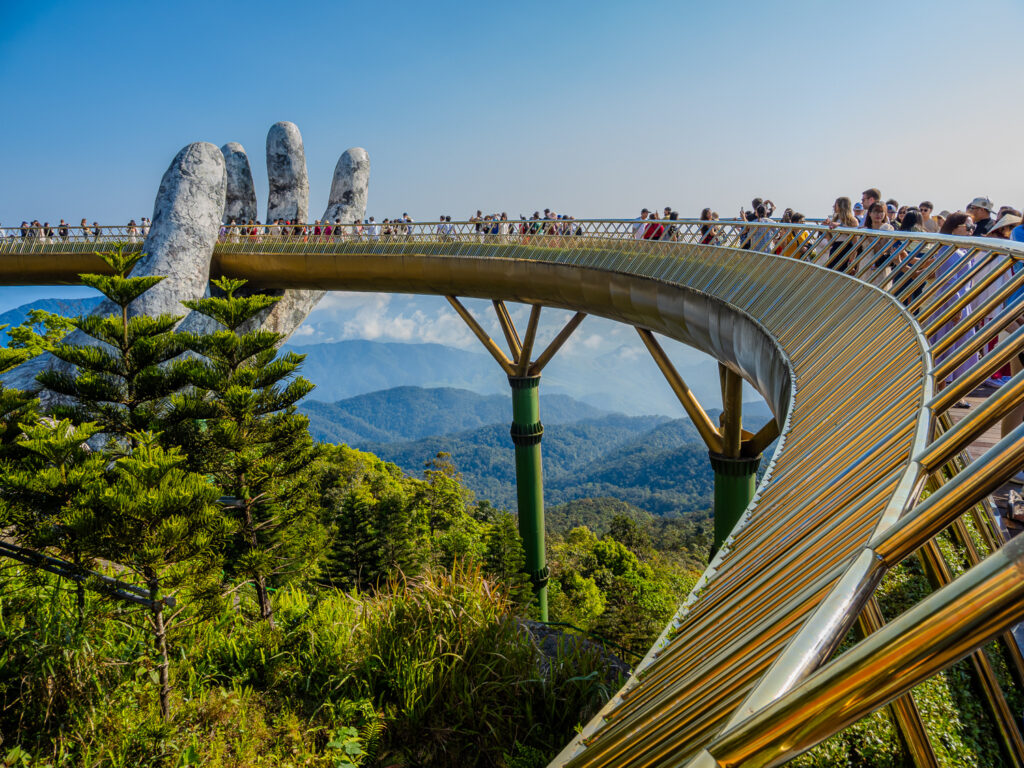
As we neared the top, the Golden Bridge came into view, and for a moment it really did feel like we had stepped into some kind of fairytale.
The Golden Bridge, or Cầu Vàng, opened in 2018 and was designed to look like a golden ribbon suspended by two massive, weathered stone hands. It stretches about 150 meters and sits around 1,400 meters above sea level, connecting the cable car station to the gardens beyond. The hands are not actual stone, but carefully constructed to look ancient, moss-covered, and elemental, as if they have been pulling this walkway from the mountain for centuries.
It is dramatic, theatrical, and absolutely iconic. And it fills up fast.
The second we got off the cable car, we made a beeline for the bridge because even that early, people were pouring in. It was crowded, yes, but still manageable enough to actually enjoy. By later in the day, it looked far more packed, so we were all grateful for the early start.
Of course Vance, being who he is, decided that such a place deserved a beer. So there he was, standing above the clouds with a Walking Tree Brewery IPA from our hometown brewery in Vero Beach, living his absolute best life. Honestly, as “Brews with Views” moments go, this one may be impossible to top.
A mountaintop with a past
One of the things that struck me most about Bà Nà Hills was that beneath all the spectacle, there is real historical weight here.
The site was originally developed by the French as a mountain retreat for colonial officials seeking cooler temperatures and relief from the heat below. At its peak, it held villas, restaurants, and resort buildings. Then history did what history so often does. Empires shifted, war tore through the region, and the resort fell into abandonment. Over time it became something like a ghost town, with ruined remnants of that earlier era left scattered through the mountain landscape. In the 2000s, Sun Group began redeveloping the site into the attraction it is today.
That layered history gives the place an unusual texture.
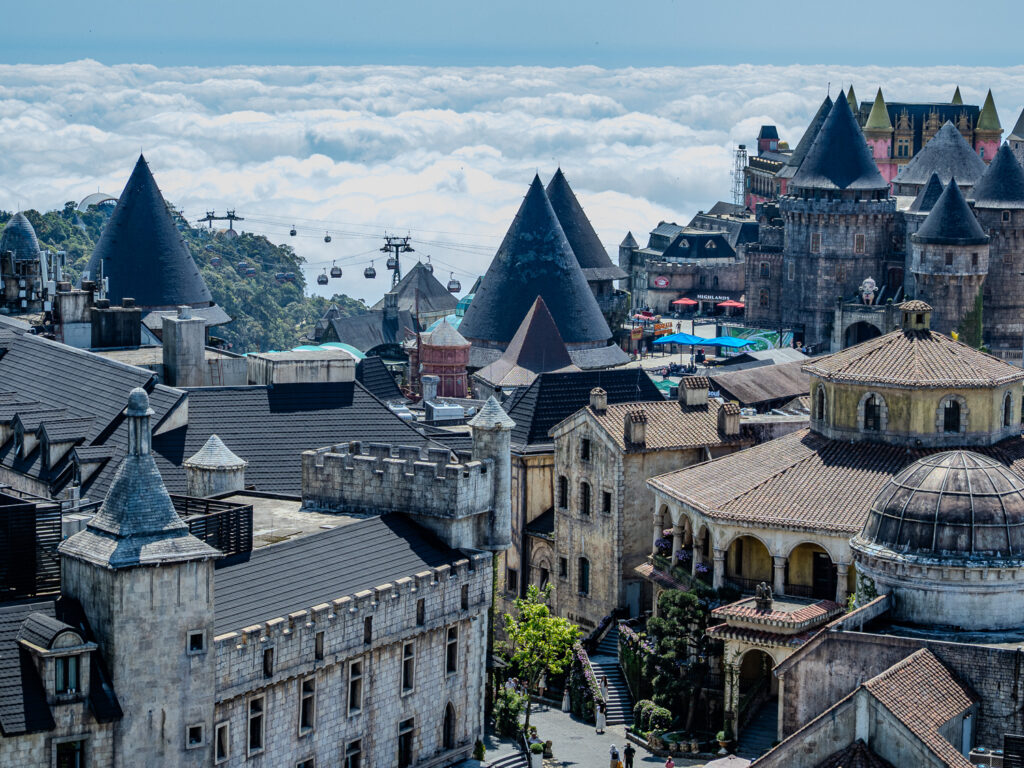
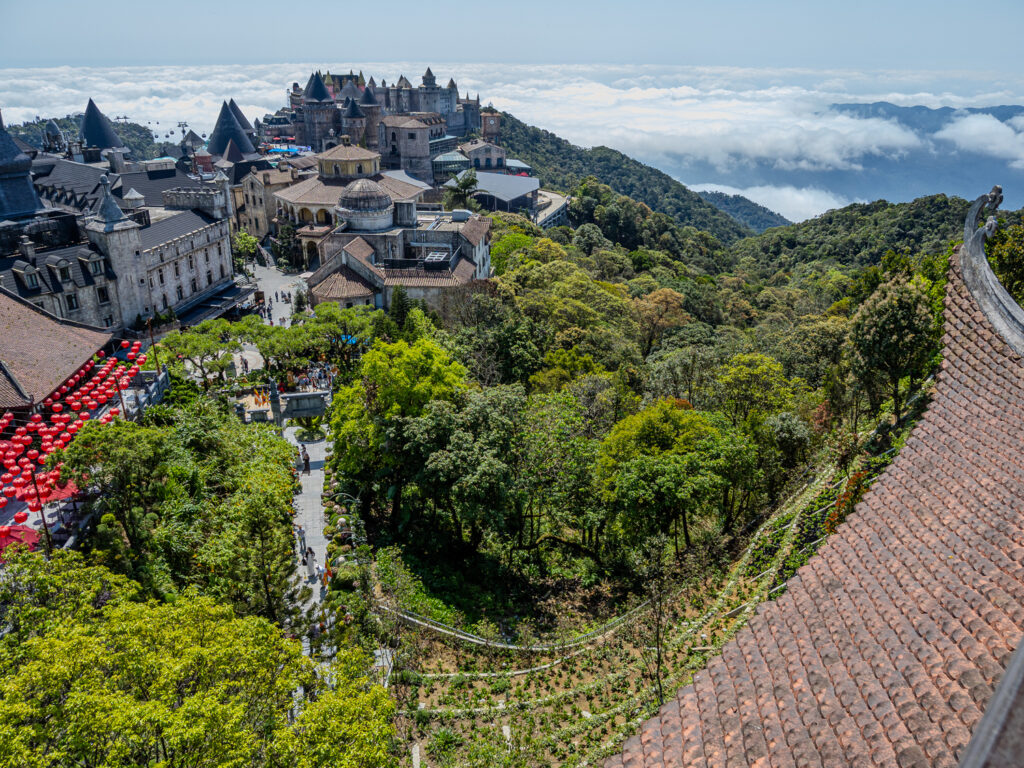
You are riding a modern cable car to a fantasy bridge and a recreated French village, but you are also standing on a mountain that has seen colonization, collapse, conflict, abandonment, and reinvention. Most of the European-style buildings visitors see today are modern recreations, not surviving originals. One notable exception is the Debay Wine Cellar, built by the French in 1923. We did not have time to visit it on this trip, which now feels like a mistake I intend to correct next time.
Whitney’s sacred pilgrimage to Pop Mart
After the Golden Bridge, we started exploring and one of the delightful challenges of Bà Nà Hills is that it’s large enough to make you feel gloriously lost. Castles, gardens, dramatic plazas, stone staircases, panoramic overlooks, and the French Village kept unfolding around us. It was impressive in every direction.
Whitney, however, had a mission.
She was absolutely determined to make it to the Pop Mart Castle, a three-story, French-style flagship store and immersive art space inside the French Village that opened in 2024. It features giant displays, exclusive merchandise, and enough collectible blind-box energy to send its target audience into orbit.


It took us a while to navigate our way there, but when she finally walked in, she was elated.
She bought the Heron Le Petit Prince series and the My Little Pony Skull Panda crossovers. I have to admit, while I do not fully understand the emotional power these items hold, I deeply enjoyed witnessing it. Every generation has its thing. Some people collect vinyl. Some people collect antique books. Some people lose their minds over mystery-box figurines with cult-like devotion and perform the unboxing like a sacred rite.
Whitney, apparently, is one of those people 😉
Sacred spaces above the spectacle
For me, some of the most meaningful moments at Bà Nà Hills came not from the grand attractions, but from the religious sites tucked into the mountain. That contrast was part of what made the day so memorable. One moment there were crowds and themed architecture. The next, there was quiet, incense, mountain air, and a sense of reverence.
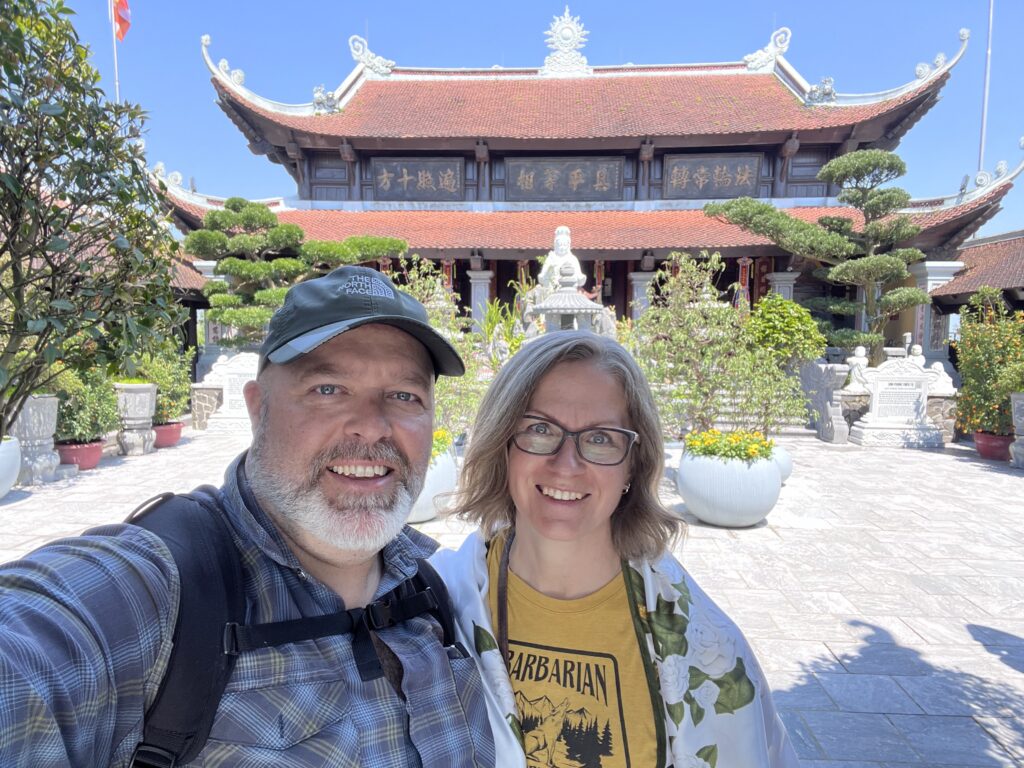
Linh Phong Thiền Tự Pagoda, built in 2006, was one of those places. Hidden more quietly within the mountain landscape, it has a northern Vietnamese architectural style and offers a gentler, more contemplative atmosphere away from the busier sections of the park. The temple includes a main hall dedicated to Buddha, corridors lined with statues of the 18 arhats, and sweeping views that feel completely removed from the commercial energy elsewhere on the mountain.
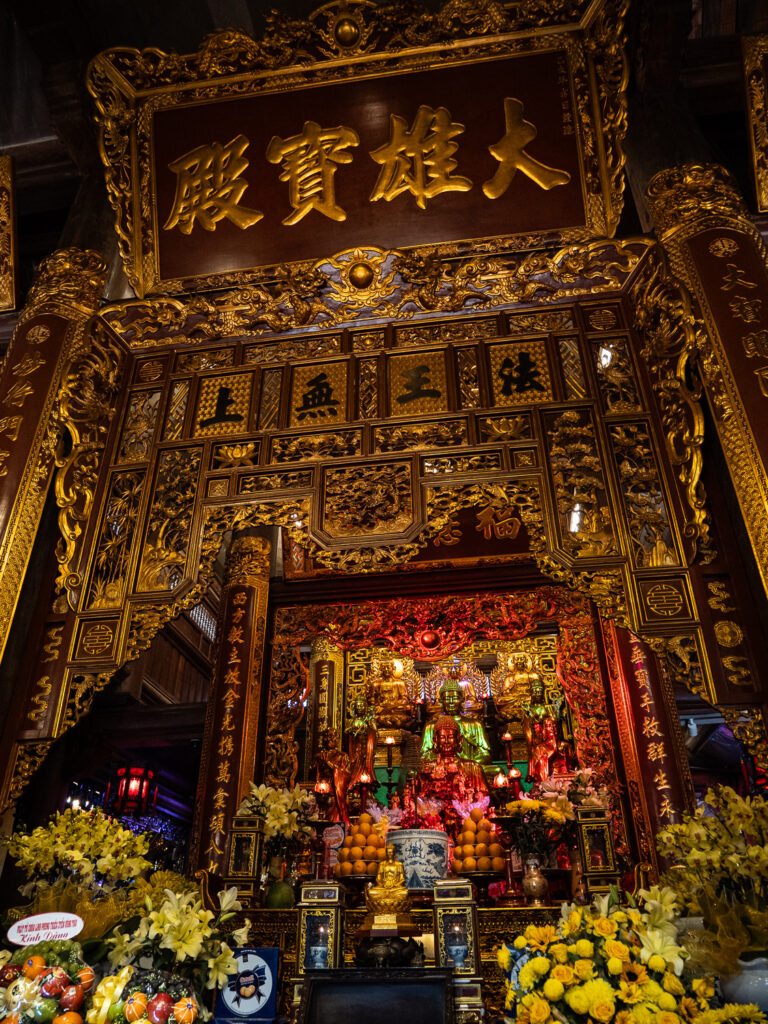
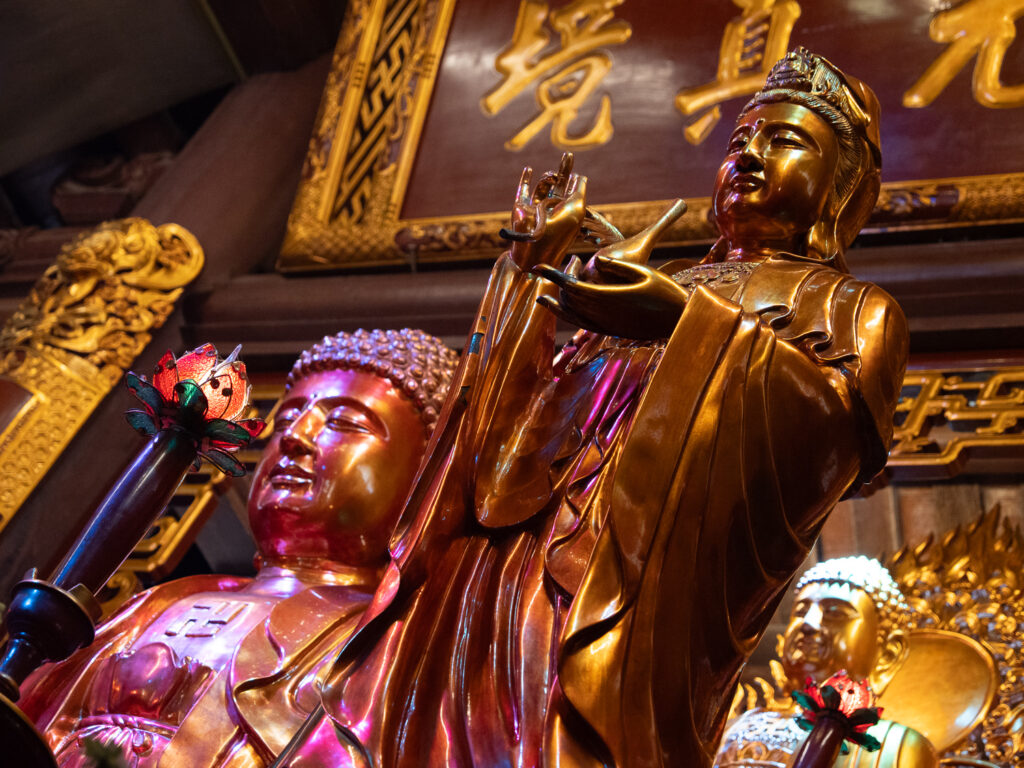
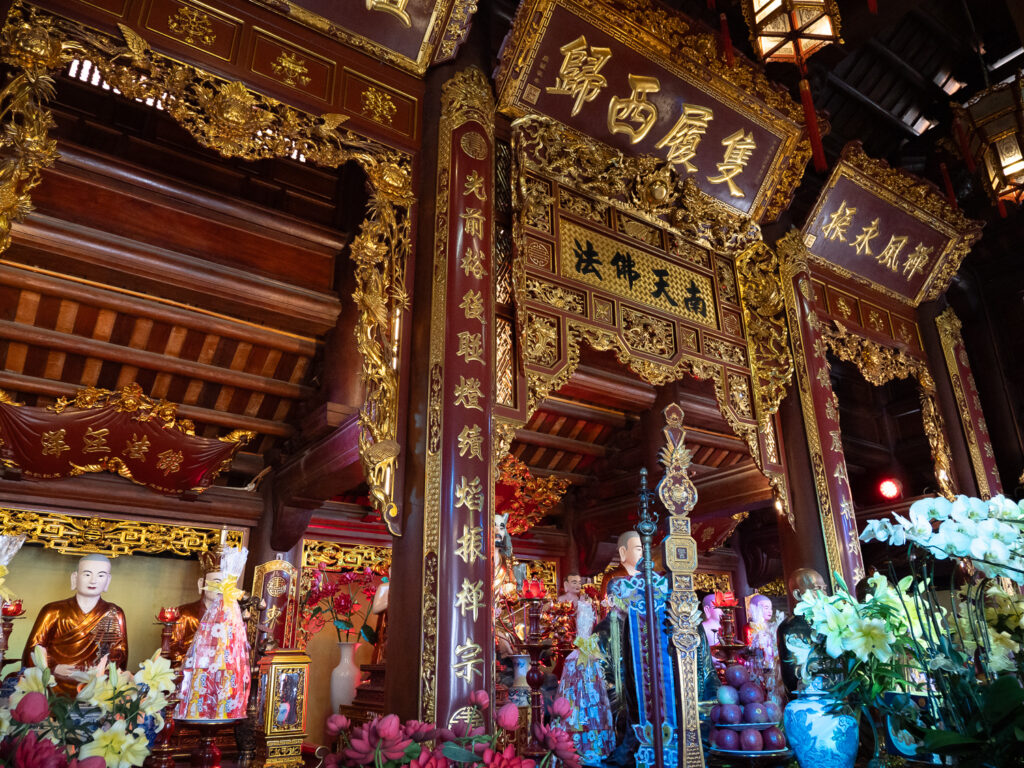
I loved that Vietnam allows you to encounter sacred places this way. Not sealed off. Not hidden from view. Not turned into spectacle either, at least not if you enter with the right spirit. They are there to be respected, visited, and experienced. There was something deeply moving about that openness.
Another place I found especially beautiful was Linh Chua Linh Tu Temple, also known as the temple of the Mother Goddess of Forests. Perched at the highest point of Bà Nà Hills, it honors Ba Chua Thuong Ngan, a revered spiritual figure associated with nature and protection. The setting alone was enough to make you pause, but the feeling of the place was even stronger than the view. Calm. Misty. Grounding. Sacred in a way that felt both intimate and expansive.
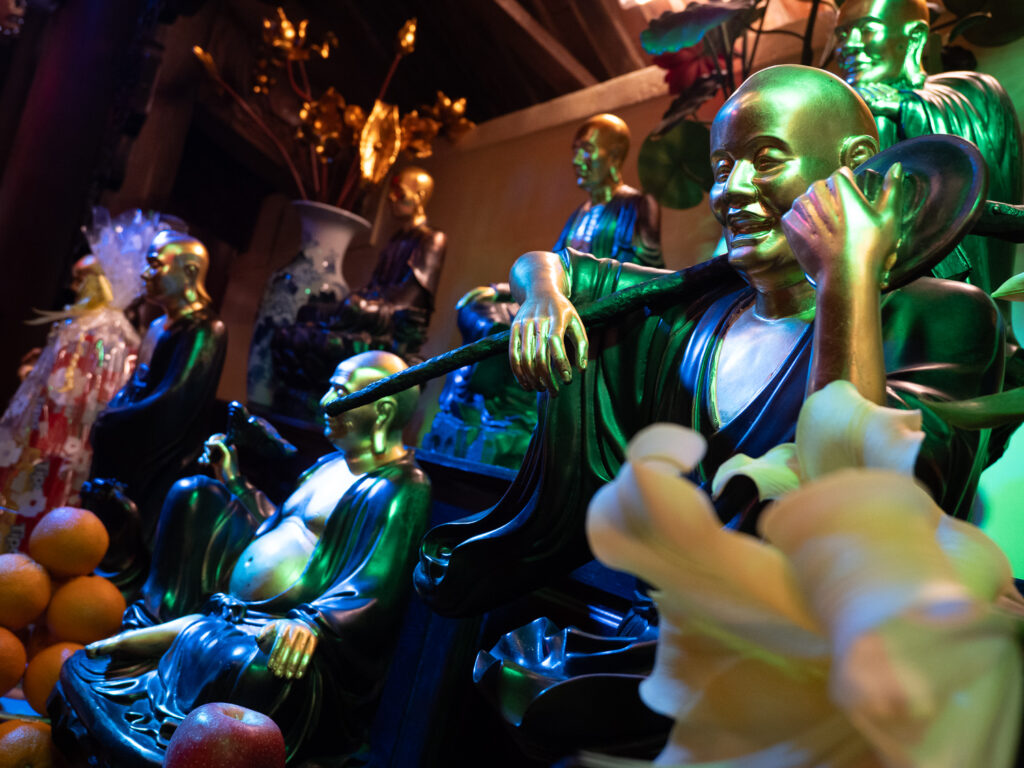
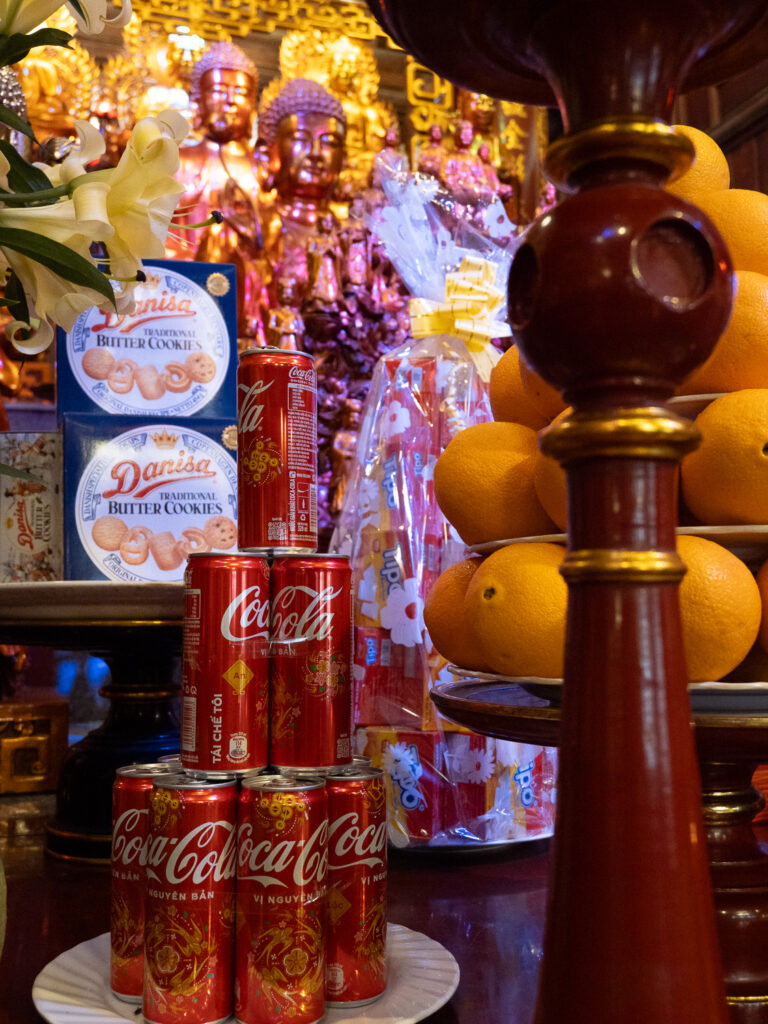
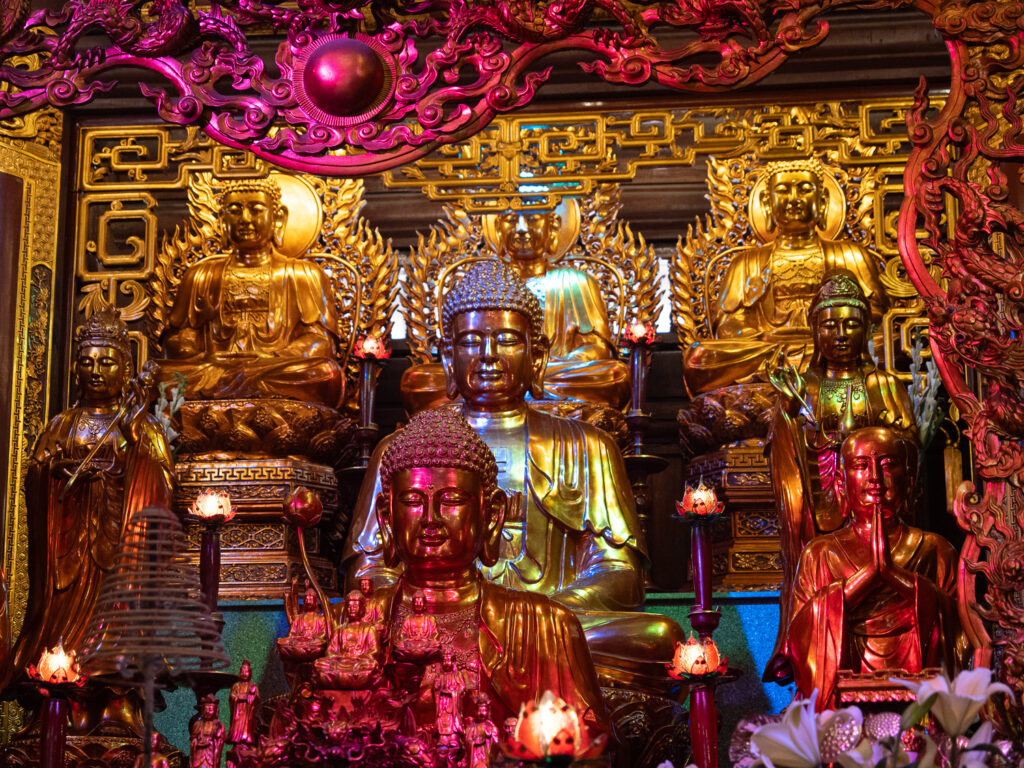
I do not pretend to understand every layer of meaning these sites hold within Vietnamese religious life, but I felt grateful to witness them. There is a generosity in being allowed to step into someone else’s sacred spaces and simply stand there in quiet wonder.
Vance finds his promised land
After the temples, we headed toward what was, for Vance, the clear spiritual climax of the day.
The brewery.
Bà Nà Brew House sits near Helios Waterfall at an elevation of over 1,400 meters and is described as the highest brew house in Vietnam. Visitors can see large brewing equipment, sample beer, and enjoy the lively atmosphere woven into this mountain-top village experience.
Needless to say, Vance was in heaven. Truthfully, we all enjoyed it, but Vance most of all.
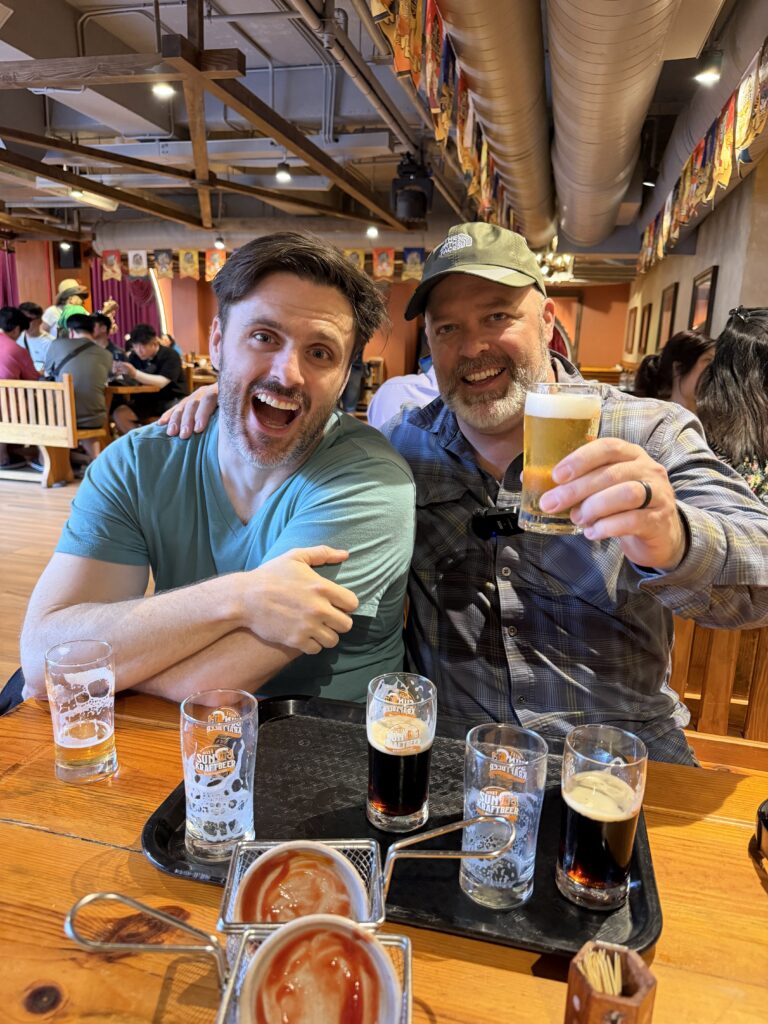
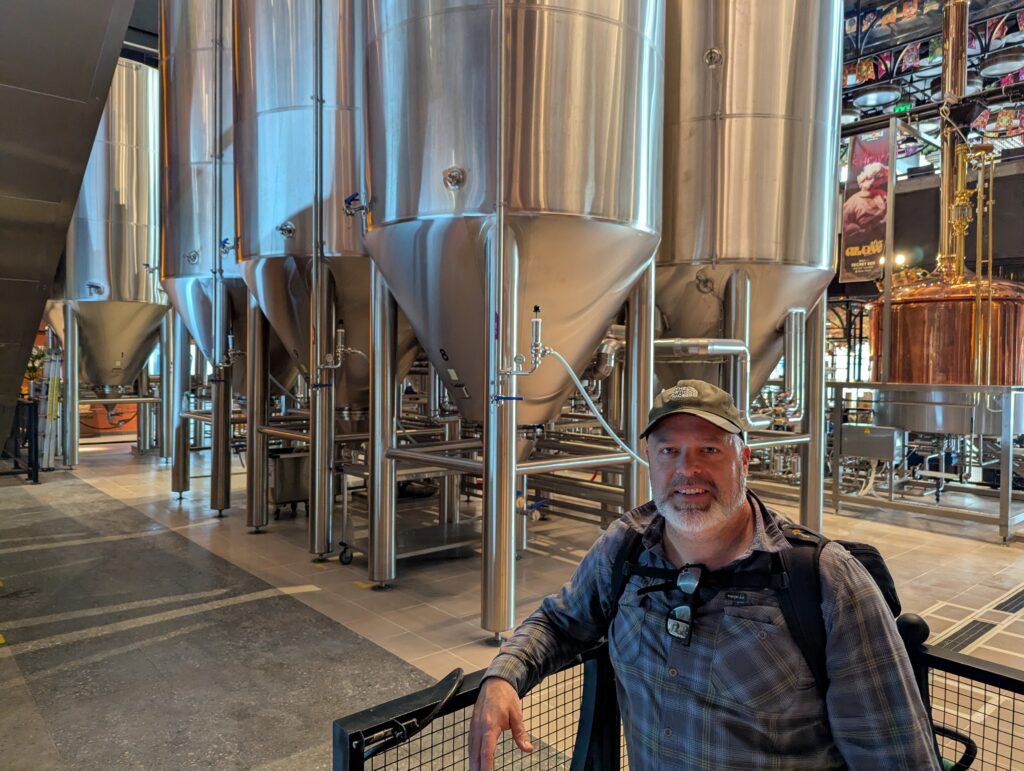
They were handing out free beer the day we visited, which felt like the kind of detail that should not exist, and yet it did. We gladly used our beer vouchers and sampled everything we could. And the beer was good. Not just “fun because of the setting” good, but genuinely tasty (if you like beer that is!).
There may not be a better place for a beer-loving traveler to sip an IPA than high above the clouds in Vietnam with family nearby and a mountain spread out below. I can see why this day ranks so high in Vance’s memory.
French Village and buffet strategy
Walking through the French Village was another highlight.
Perched high in the mountains, it is a large modern recreation of a 19th-century European town, complete with Gothic-style facades, cobblestone streets, castle-like structures, dramatic plazas, and cafés tucked into the fog. It is not historical in the sense of being original, but it is visually striking and, somehow, weirdly romantic.
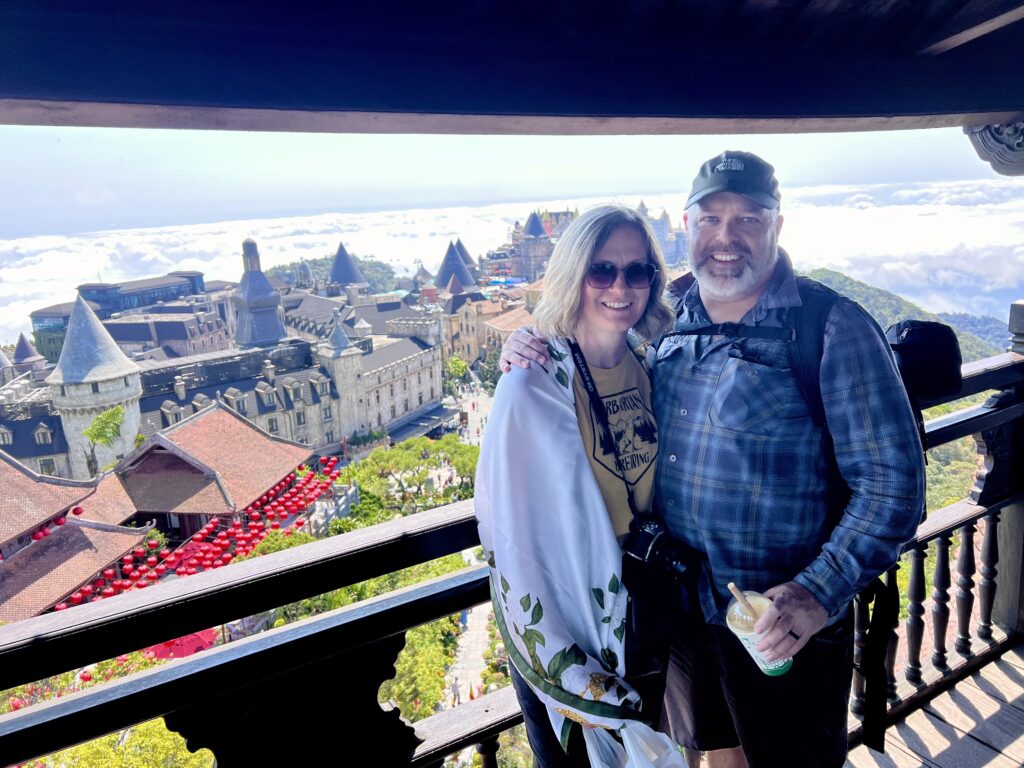
I am not usually a theme park person, and yet I really loved it up there. Maybe it was the elevation. Maybe it was the cooler air. Maybe it was the absurdity of feeling like I was wandering through a fantasy version of Europe on a Vietnamese mountaintop. Whatever the reason, it worked for me.
And the buffet upgrade was, in our opinion, completely worth it. There was a huge spread with international options and plenty of Vietnamese dishes. We got there early, which I highly recommend, because it was still calm-ish and fully stocked. By the time we were leaving, the place had become absolutely packed. The kind of crowded that makes you suddenly very grateful for every earlier life decision that brought you there ahead of the wave.
The ride down
The cable car ride down was just as spectacular as the ride up, though maybe a little more psychologically complex. At one point Whitney commented on how eerie it was to realize what a seemingly small piece of metal appeared to be holding us all aloft over the jungle floor. She may have thought about that observation for a little too long and had to talk herself back from full existential panic, which felt relatable.
Before loading back onto our very affordable, very fabulous private bus and continuing on to Hoi An, we gathered at the park entrance for group photos. It had been one of those days that leaves everyone both exhilarated and pleasantly wrung out.
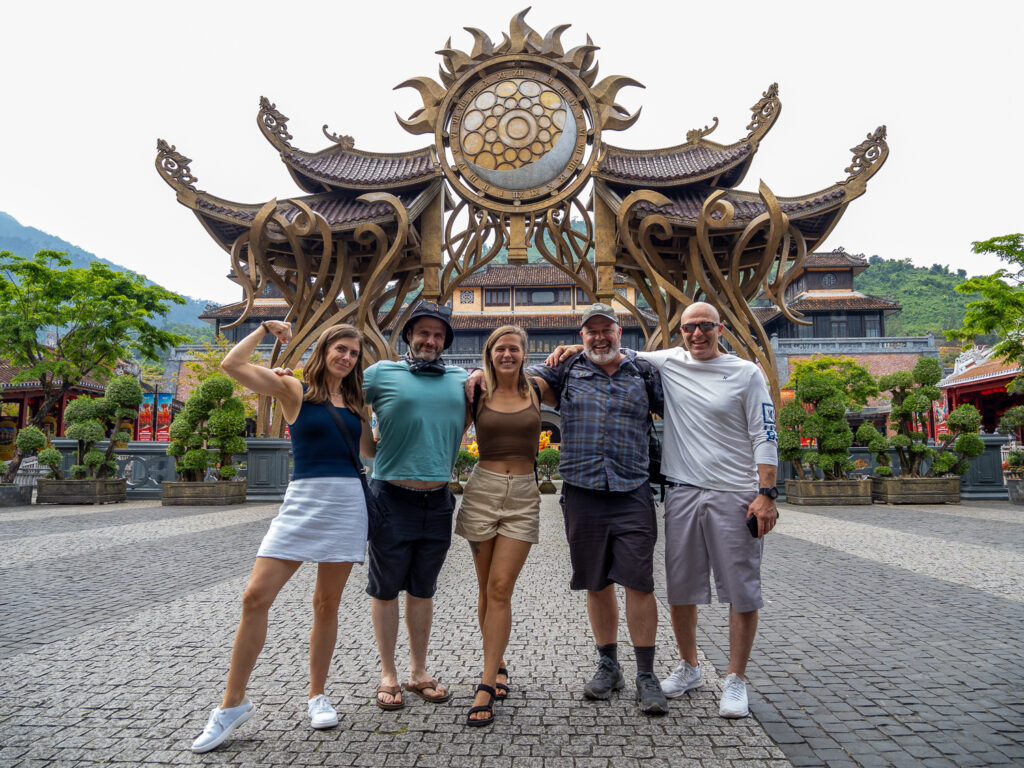
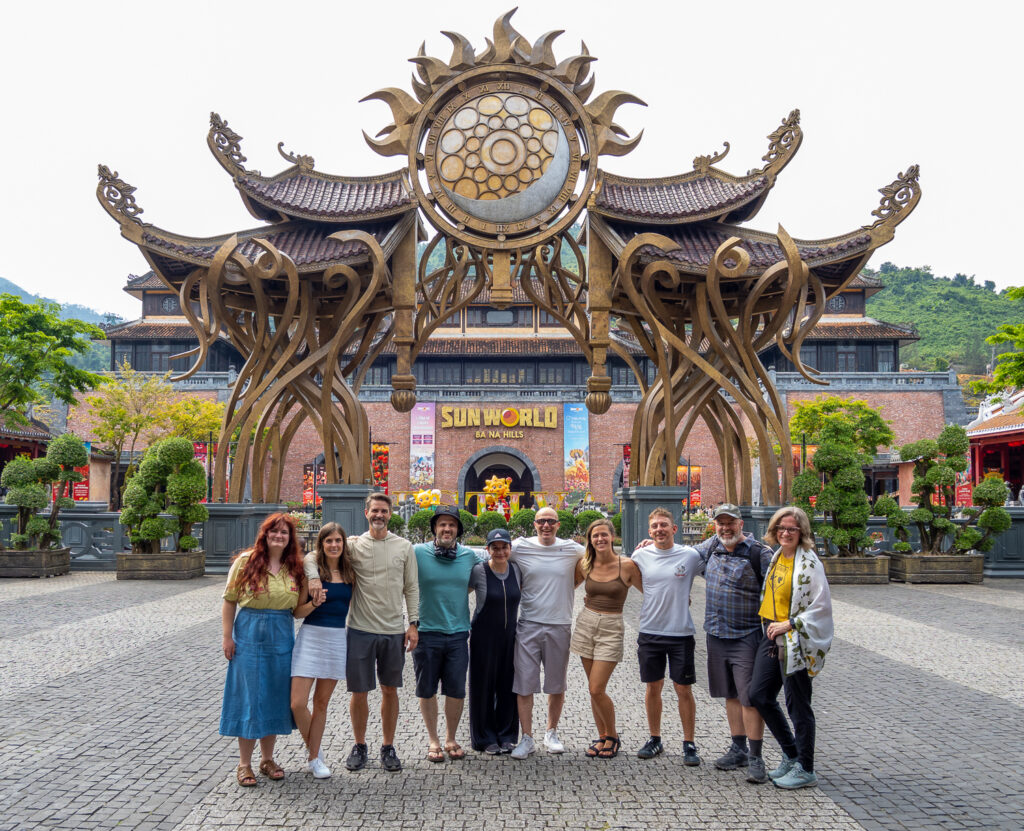
Beautiful views. Sacred places. A strange fairytale bridge. A French village in the clouds. Good beer. Family laughter. A dash of pop-culture obsession. A mountaintop buffet victory.
Bà Nà Hills could have felt gimmicky. Instead, it felt unforgettable.
Not because every part of it was subtle or historically pure or easy to categorize, but because it was so unexpectedly layered. Awe, beauty, reinvention, reverence, spectacle, silliness, and wonder all sharing the same mountain.
And somehow, high above Da Nang, all of it worked.