Singapore: The Fine City
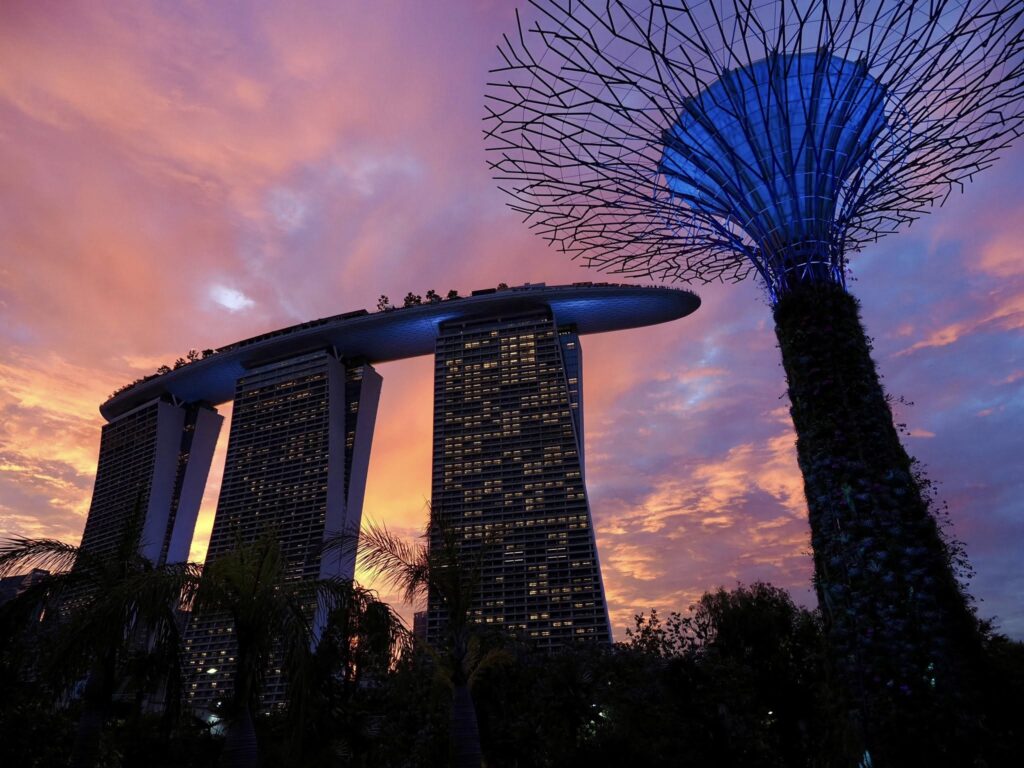
They call it a “fine city.” Our taxi driver grinned when he said it.
“You know why, right?” No chewing gum imports since 1992. Fines for littering. Fines for just about everything.
But after a few days in Singapore, what struck us most wasn’t the rules.
It was the openness. The pride. The sense that the whole world somehow fits onto one remarkably clean island.
A Tiny Island With an Outsized Story
Singapore is small, just over 280 square miles. Smaller than many U.S. cities and yet, it is one of the world’s most important financial hubs.
Founded as a British trading post by Sir Stamford Raffles in 1819, occupied during World War II, expelled from Malaysia in 1965, and forced into sudden independence. Singapore’s rise from vulnerable port city to global powerhouse happened within a single lifetime.
Which makes the skyline feel even more surreal. This wasn’t accidental growth, it was deliberate and disciplined. Visionary. And standing beneath it, you can feel that.
A Bucket List Dream
This was a dream come true, especially for Vance.
As a young adult living just across the border in Malaysia, he frequented Singapore often. Our girls grew up hearing stories about this chapter of his life. Humid streets, hawker stalls, visa runs, cultural contrasts.
And now we were all standing there, together.
I kept catching him looking around, reflective. For Vance, I think it must have felt like stepping into a former version of himself. For the girls and I, it was sensory and immersive overload. The pinch-me moments were constant.
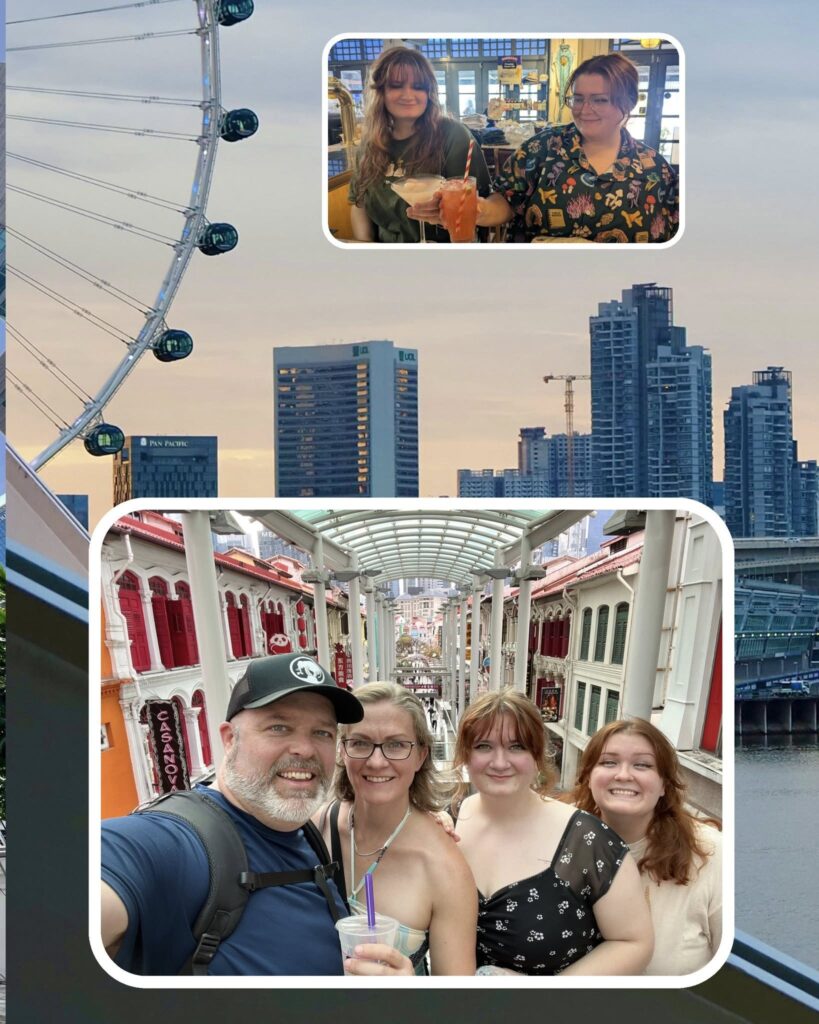
The Skyline That Looks Like a Hallucination
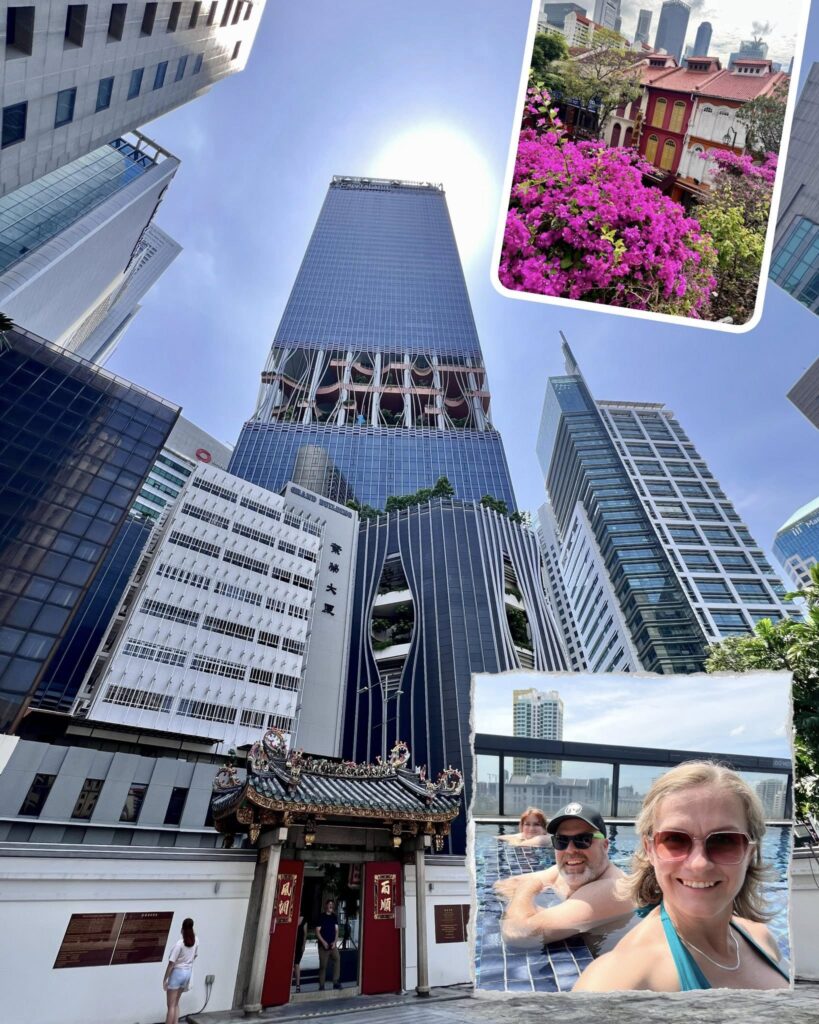
The first morning, Vance and I stood at our hotel rooftop pool, coffee in hand, staring toward the horizon. Something hovered in the distance.
A ship? In the sky? Was the horizon warped? Were we just wildly jetlagged?
We squinted dramatically, and then it clicked. Marina Bay Sands.
That “ship” is actually a 57-story architectural marvel topped with a sky park longer than the Eiffel Tower laid down horizontally. When it opened in 2010, it instantly became one of the most recognizable buildings in the world.
But for a solid minute, we were convinced we were witnessing a floating cruise liner suspended over the city. Singapore bends expectation like that.
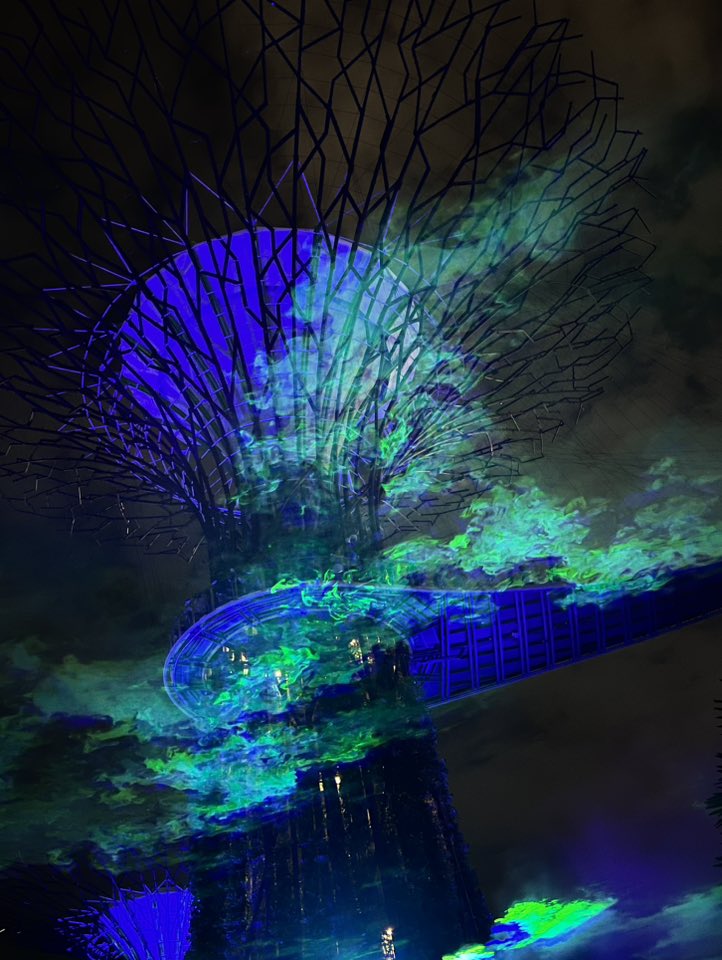
And then there were the evenings at Gardens by the Bay. The Supertrees, towering vertical gardens ranging from 80 to 160 feet tall, aren’t just aesthetic. They’re engineered to collect rainwater, generate solar power, and act as air exhaust vents for nearby conservatories. It’s sustainability disguised as spectacle.
When the music swelled and the lights pulsed during the night show, it felt cinematic. Futuristic. Almost unreal. And there we were, the four of us, staring up into glowing steel and foliage.
How are we here?!
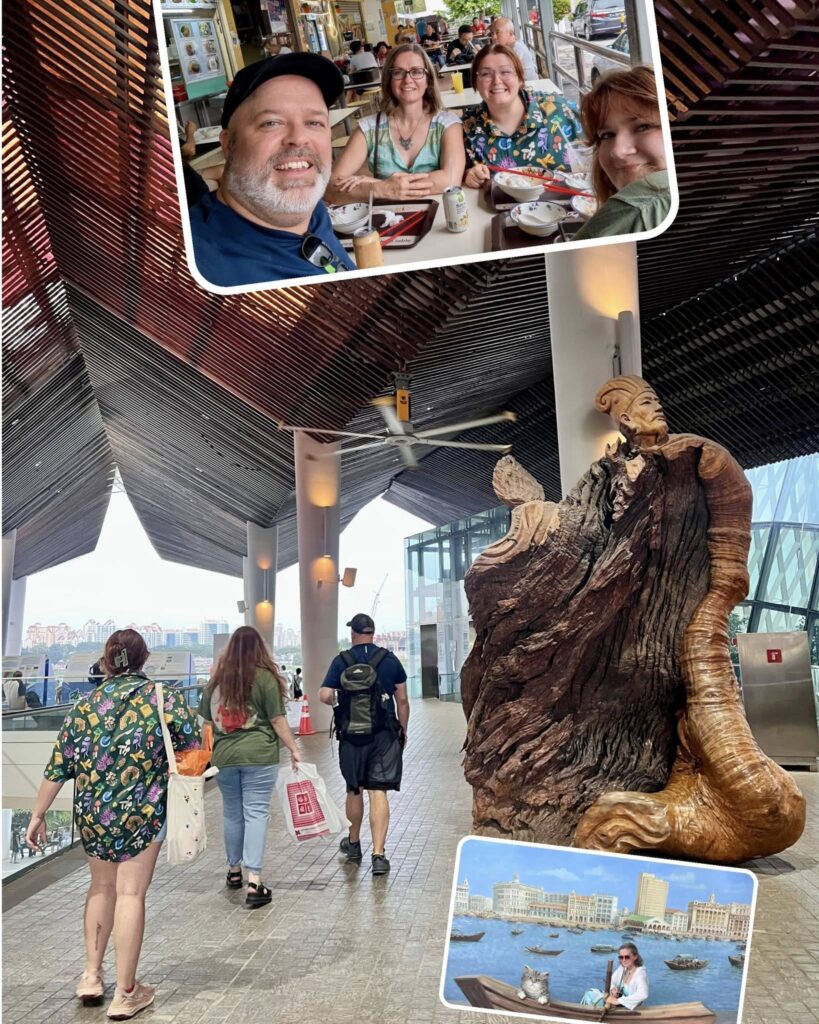
The Merlion & A City of Symbols
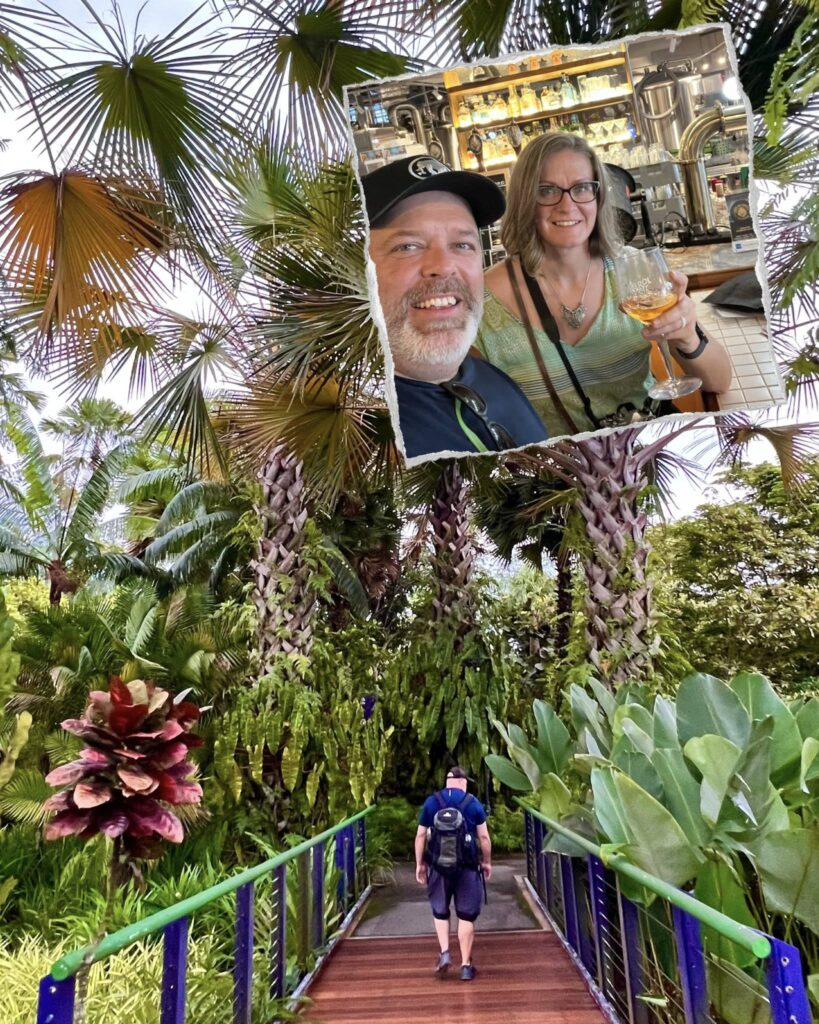
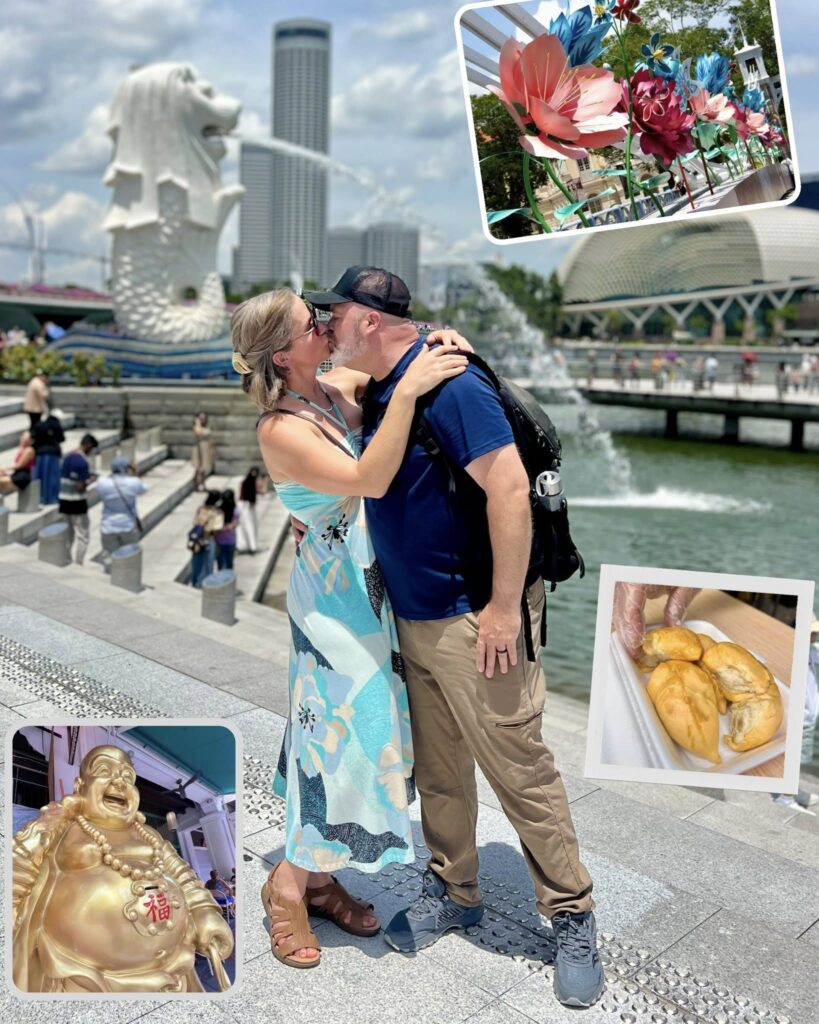
We wandered through Merlion Park, where the half-lion, half-fish Merlion has become the city’s symbol. The fish body represents Singapore’s origin as a fishing village. The lion head comes from “Singapura,” meaning Lion City in Sanskrit.
Myth and modern, layered together. Singapore does that well.
Faith, Welcomed
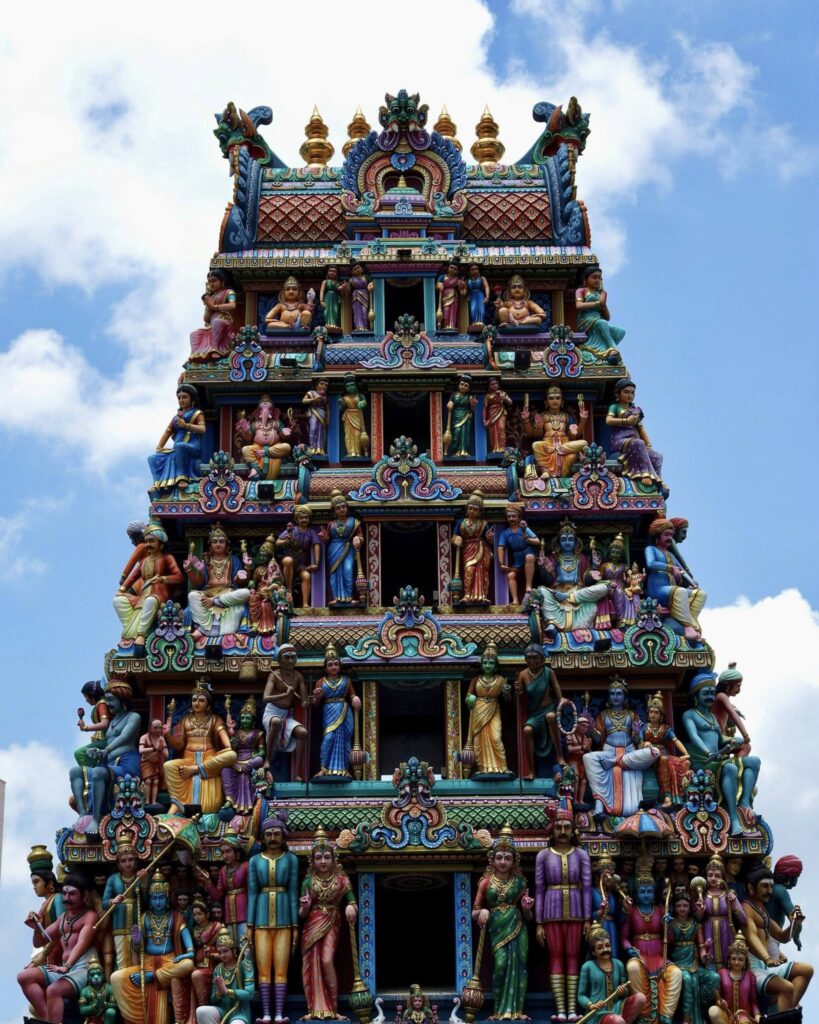
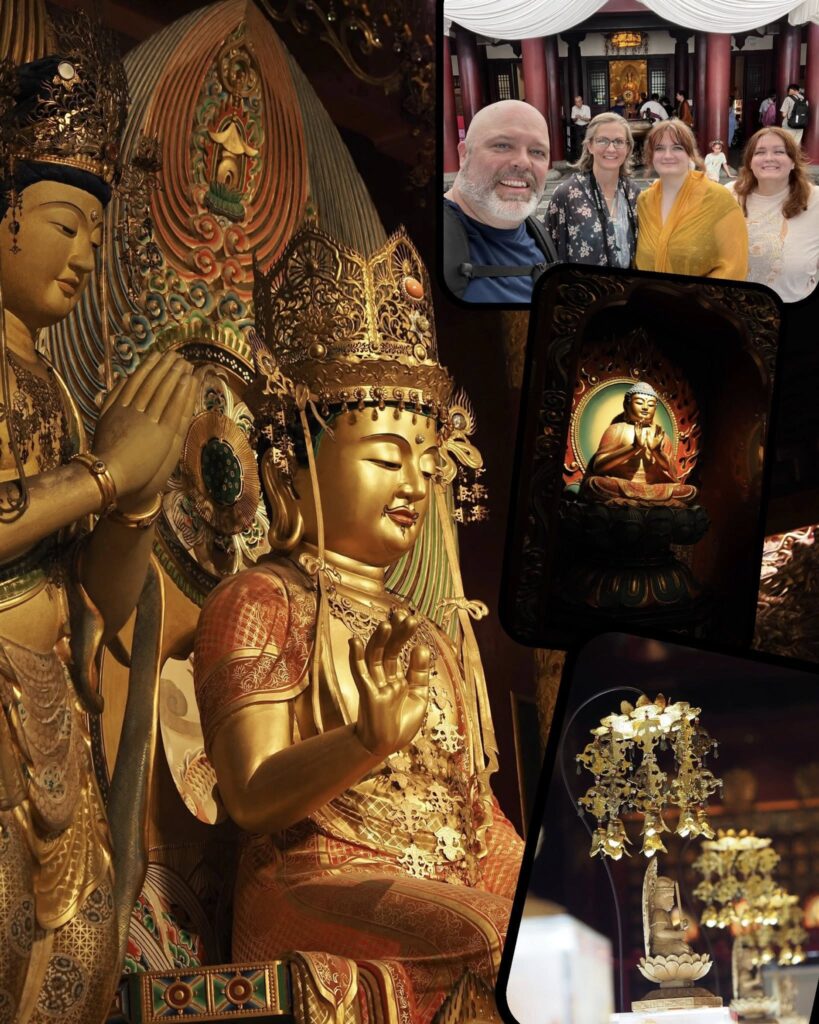
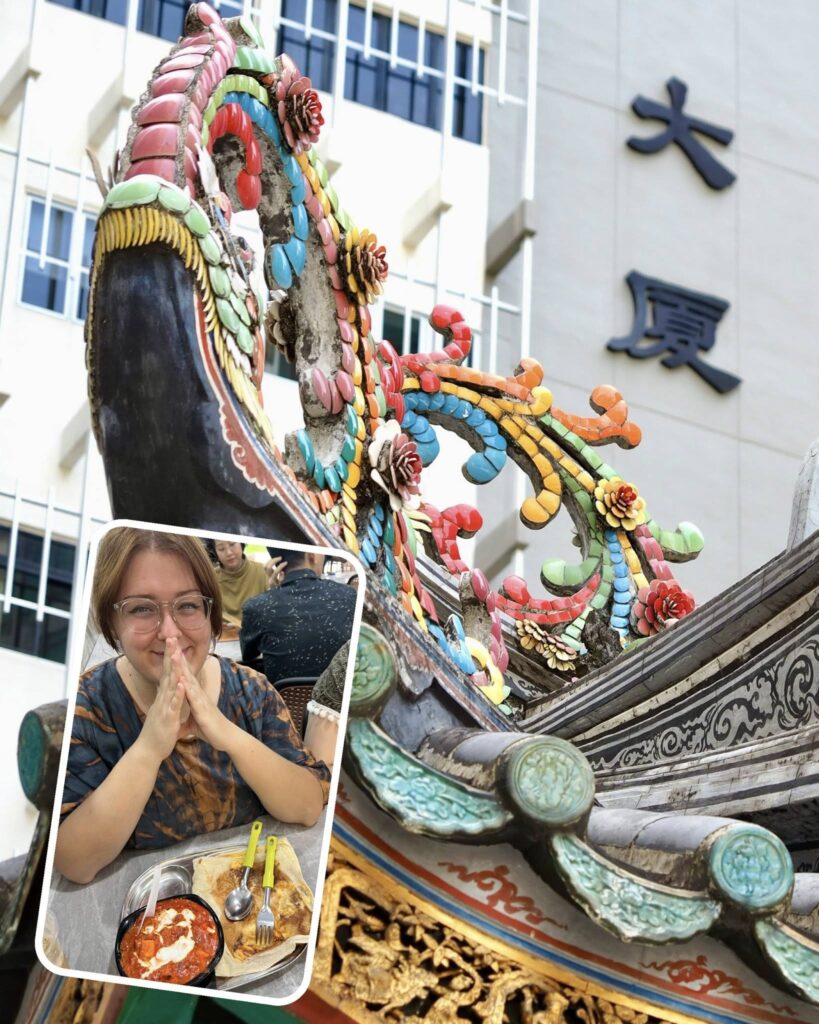
One of the most unexpected moments for me wasn’t the skyline, it was the temples.
Singapore is religiously diverse. Buddhist, Taoist, Hindu, Muslim, Christian, all practicing freely on one small island. Nearly 80% of residents live in government-built housing, yet religious harmony is actively protected by law.
And what struck me most? We were welcomed.
Shoes off. Respect given. Doors open.
The pride in sharing sacred space with visitors was palpable. It’s easy to form assumptions about cultures from afar. Much harder when you’re standing inside them.
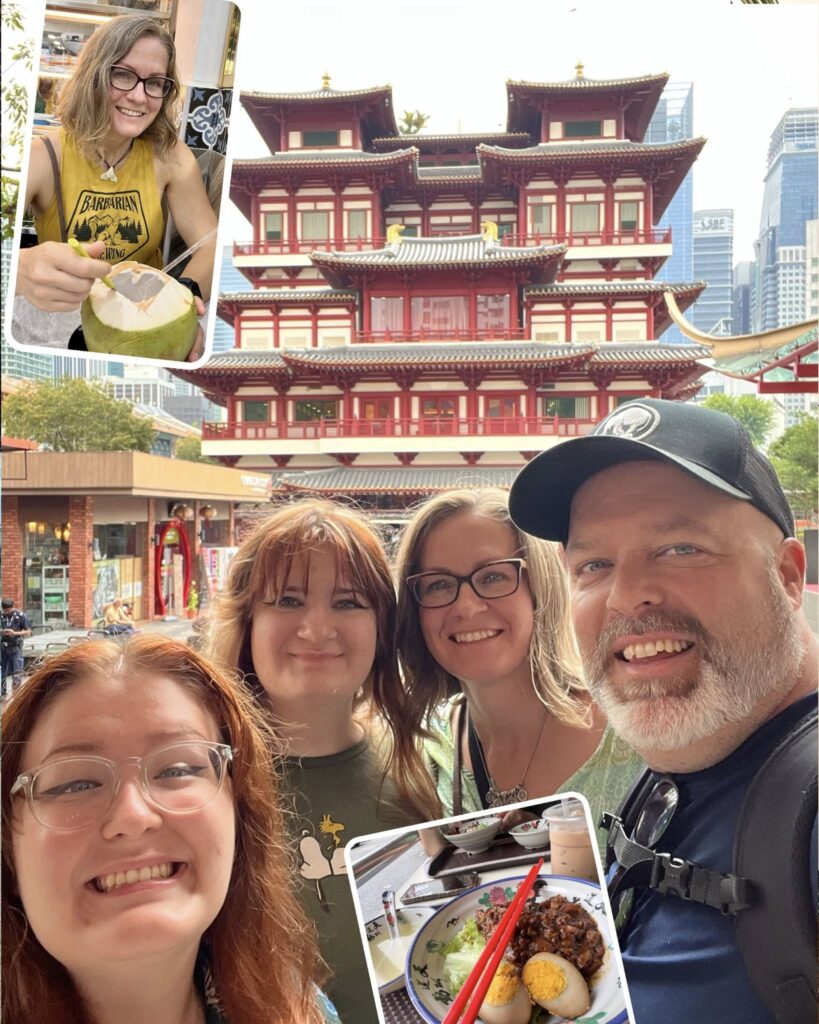
Hawker Stalls & Humble Perfection
Singapore’s hawker culture was added to UNESCO’s list of Intangible Cultural Heritage in 2020. Not because it’s fancy, but because it’s foundational.
Hawker Centres aren’t just food courts. They are community anchors. Multi-generational recipes passed down through tiny stalls serving Michelin-level flavor for a few dollars.
We ate like royalty, sitting at plastic tables under fluorescent lights.
Laksa that I still crave.
Satays grilled to smoky perfection.
Fish head curry bold and unapologetic.
Roti torn and dipped generously.
And then… the durian. Often called the “king of fruits,” banned in many hotels and public transit because of its smell, yet beloved across Southeast Asia.
They handed us gloves. Told us to sit down and eat it right there in the street. I was skeptical. Turns out? It was excellent. Creamy, rich and complex. Vance said it was some of the best he’d ever had.
I wish I could eat like we did in Singapore every day for the rest of my life!
Singapore Slings & Clever Women
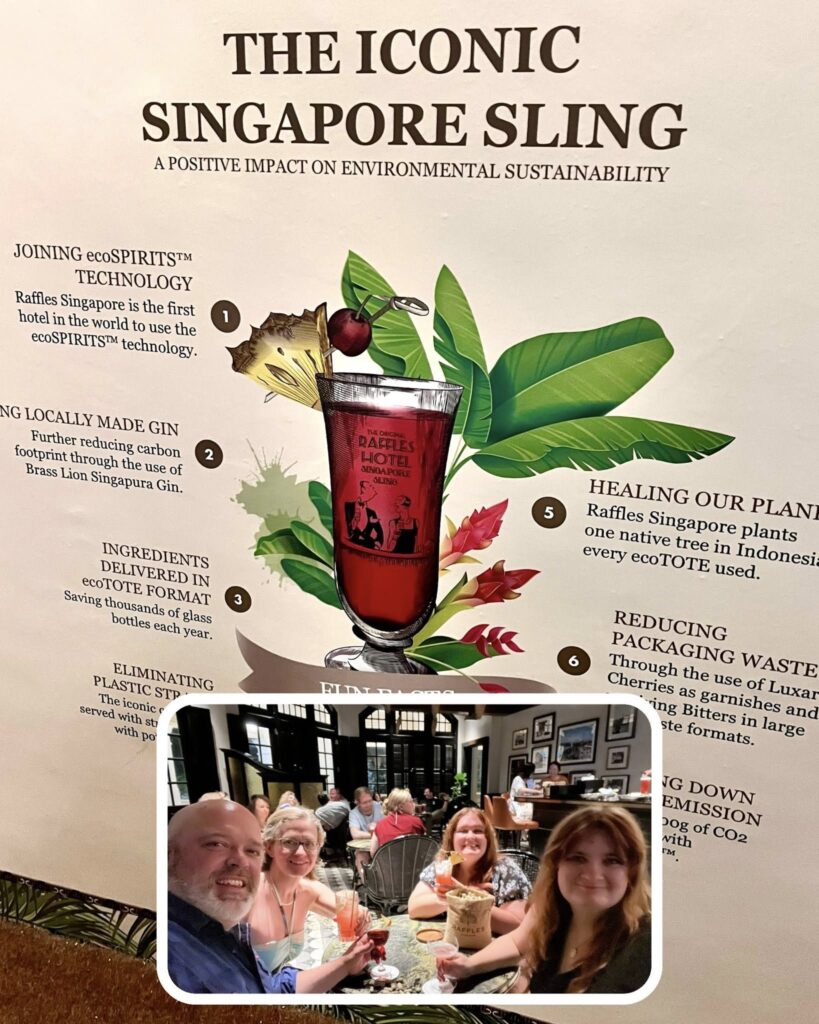
One evening, we dressed up and fully embraced being tourists at Raffles Hotel.
The Singapore Sling was created there in the early 1900s by bartender Ngiam Tong Boon. At the time, women were discouraged from drinking alcohol publicly, so he crafted a gin-based cocktail disguised as fruit juice.
Pink. Pretty. Strategic.
Restrictions existed. So did ingenuity.
We sat with our daughters, sipping Slings, reading about colonial history and women quietly pushing against social limits. It felt indulgent and reflective at once.
History is cool like that.
Travel Is Fatal to Narrow-Mindedness
Mark Twain once wrote:
“Travel is fatal to prejudice, bigotry, and narrow-mindedness.”
Singapore makes that feel less like a quote and more like a lived experience.
You ride immaculate subways next to strangers who speak three languages. You eat food rooted in generations of migration. You stand beneath architecture designed for a climate most Americans have never experienced.
The world stretches. And suddenly, it doesn’t feel so distant after all.
Just Go
There were countless reasons we shouldn’t have taken this trip. Finances. Logistics. Exhaustion. Timing. Responsibilities. There will always be reasons.
You will never feel fully prepared. You will never feel like you have enough saved for every hypothetical rainy day. You will always be waiting for the “right time.”
There isn’t one.
Bucket list trips don’t happen because it’s convenient. They happen because you decide they matter. We have no regrets. A few days in this “fine city” reminded us that the world is vast and welcoming and layered beyond what headlines suggest. And if you let it, it will stretch you in all the best ways.
So go. Get out there. See it with your own eyes.
Or, you can easily come up with a million reasons why you can’t. And that… that would be the real fine.